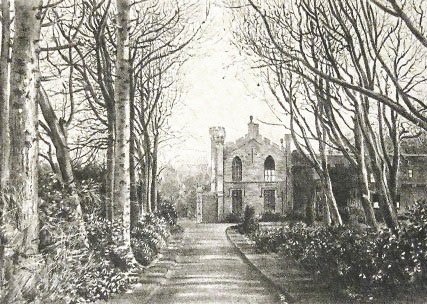
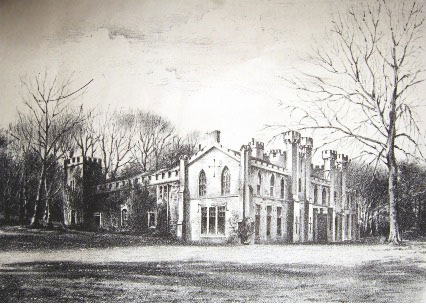
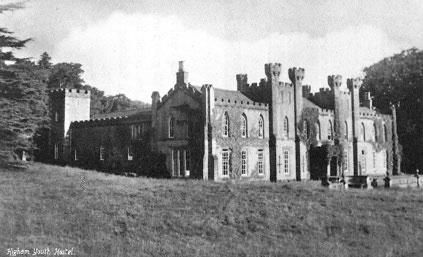
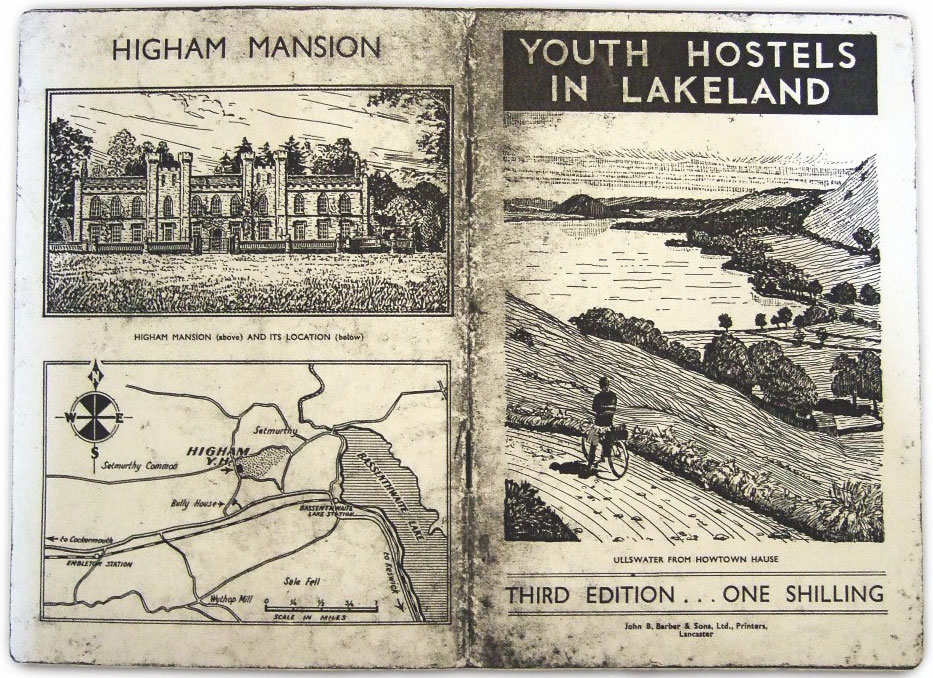
The house lay empty for 4 years after it passed to the Treasury until 1951, when it was handed over, free of charge, to the Youth Hostel Association. Bunkbeds were installed in the upstairs rooms to accommodate up to 100 guests. The house was too cold for the hostel to open all year round, so in the winter Higham became a social centre for the local area, hosting dancing and amateur dramatics. Higham was also a little too far away from the central Lake District fells for the keen youth-hostelling ramblers who travelled on public transport, so in 1955 the YHA sold Higham to Cumbria County Council for £7,500.
The county council then ran Higham as a boarding school for girls from 1956 to 1974, but Higham was not a comfortable place to stay. There were problems with heating, woodworm, wet rot and the water supply. In 1968, Her Majesty’s Inspectors visited and produced a damning report, concluding that “On both educational and financial grounds, it might be better to build a girls’ hostel at Ingwell (a similar special school for boys, near Whitehaven) and use the new teaching accommodation there to the full. Higham is increasingly appearing to be the wrong school in the wrong place.”
In 1971, the school governors resolved to recommend closure. The Director of Education for Cumbria, Gordon Bessey MBE, who had been instrumental in the purchase of Higham, announced that Higham would be used “to fulfil the need for residential courses for adult education with particular reference to the in-service training of teachers, tutors, lecturers, youth leaders and other officers of the Council…It is suggested that Higham be used not only as an adult residential centre but as a training centre for catering staff which will overcome the supply problem…This is a once-for-all opportunity of using this fine building and site for a purpose, the need for which will become more and more urgent as the years go by.”
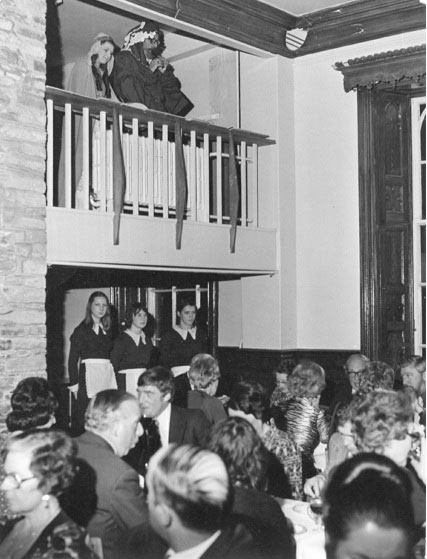
Within a month of the school closing, Higham re-opened as a residential centre for adult education, re-named as Higham Hall. Peter Boulton replaced Gordon Bessey as Director of Education and appointed Peter Hadkins as warden. Hadkins began to build relations with other adult education centres across the county, and with Newcastle and Liverpool universities, to diversify and expand the courses and summer schools offered at Higham. More alterations were needed to turn the dormitories into individual bedrooms and a residents’ bar opened in 1975. As Hadkins wrote, “Buildings that are 150 years old inevitably need a good deal of attention, and the Gothic Revival period was not noted for the soundness of its buildings. Numerous beams and plaster ceilings have had to be replaced; the stone entrance porch proved to have no foundations and had to be underpinned; it was rather alarming to discover that the insulation material used above the ground-floor ceilings was sawdust. There has been much to do outside the house as well. Undergrowth was cut back, paths re-laid and lawns trimmed down to size. A putting green was created on the lawn on the south side of the house. The pond beyond had become a stagnant marsh and had to be thoroughly cleaned out. At the back of the house the girls’ playground, which they had used chiefly for netball, was re-surfaced and transformed into an all-weather tennis court.”
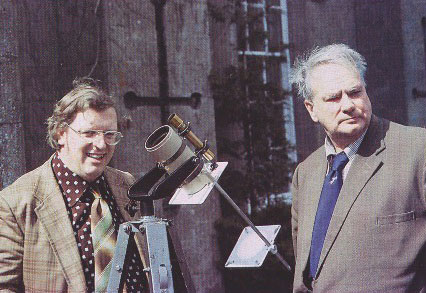
The college went from strength to strength, establishing a reputation for both excellent educational opportunities, which included off-campus study trips to Norway, Italy, France, Russia and Egypt – and its catering. High profile cultural figures from Cumbria and beyond came to speak or teach at Higham: from Patrick Moore to Melvyn Bragg and Norman Nicholson – who gave his very last poetry reading at Higham – and local mountaineering legends Chris Bonnington and Doug Scott.
This final incarnation seemed to suit Higham. As one student wrote,
“Nestled leisurely in the rich, tree-lined, sheep-filled, water-softened Lake District is an old, mellowed manor house, creaking with historic sounds that bounce from the grey local stone, the spacious interior ceilings, and the secluded hallways that stretch through the floors like the long, linear antique fingers of a piano virtuoso. Higham Hall is no ordinary manor house; it is the site for residential courses provided by the Cumbria Education Committee…”
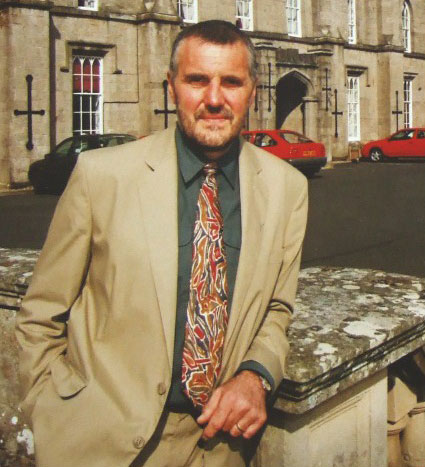
Alasdair Galbraith became the first college principal in 1991. Between 1991 and 2001 he oversaw many improvements to the accommodation (and bathrooms), and the commissioning of the commemorative stained-glass window over the stairs and the millennium tapestry which hangs in the dining room. Alasdair handed over the baton to Alex Alexandre in 2001.
As Alex recalls, he began to prepare the college for independence from the start; so, when Cumbria County Council announced it was considering the sale of Higham Hall in 2006, he had a plan. With the support of the Friends of Higham and a group of ‘trustees-in-waiting’ a business plan was developed, a charitable trust established to negotiate the purchase and eventually run the college, and a reserve fund created through the sale of over 3,500 ‘bonds’ at £25 each. This was students’ money, held in trust, to be spent on future courses.
After two years of negotiations, Higham Hall College became a company limited by guarantee, a registered charity and an educational trust. A 22-year mortgage was agreed with the Cumberland Building Society and the trust became the owners of the Hall and all its contents. All staff contracts were transferred across, catering and cleaning were brought in-house, and the transition from local authority to the independent educational trust which continues to run the college today was complete.
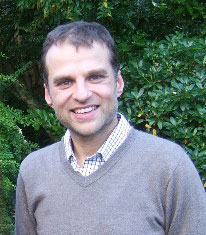
By the time Alex stepped down, the range of courses on offer had expanded further, as had the college’s art collection. George Cooke took over in 2012 and oversaw a period of steady growth until the world turned upside-down in 2020. His brinkmanship, with the support of the college trustees and a team of dedicated staff, steered the college safely through three very difficult years during the COVID-19 pandemic. When the college’s fifth principal, Dr Lizzie Fisher, arrived in September 2023, the college was facing yet more stormy weather as the cost-of-living crisis sent costs skywards at unprecedented rates.
A fundraising campaign is now underway and the Friends of Higham relaunched with the aim of rebuilding the college’s reserves, protecting and preserving our 200-year-old building and continuing to improve and invest in the site, teaching facilities and accommodation to ensure Higham remains a place that nurtures creativity, curiosity and wellbeing for generations to come.
In 2026 we will celebrate 50 years of adult education at Higham: 50 years of, in Alex Alexandre’s words, “enriching life in the broadest sense, providing opportunities to extend understanding, exchange ideas, develop skills and enjoy the experience of discovery.”
If the last fifty years have shown us anything, it is that the college is a living institution that has adapted and thrived and will no doubt continue to evolve to meet the challenges ahead.