We’ve been doing a lot of thinking about how we manage resources in the gardens here at Higham Hall. Dealing with our woody waste is a key aspect of this; large gardens with mature trees generate a lot of dead wood from fallen trees, branch drop and pruning. Providing habitat for wildlife underpins our management of the gardens and so we are keen to maximise this valuable resource.
Wood is a complex mix of cellulose and lignin. As part of the decay process, these compounds are selectively removed by different groups of fungi, providing a rich source of nutrition for these often-overlooked organisms. Many invertebrates, such as stag beetles, depend on dead wood to complete their lifecycles. A dense stack of dead wood provides shelter and nesting opportunities for many of our native birds. Dead wood is full of life!
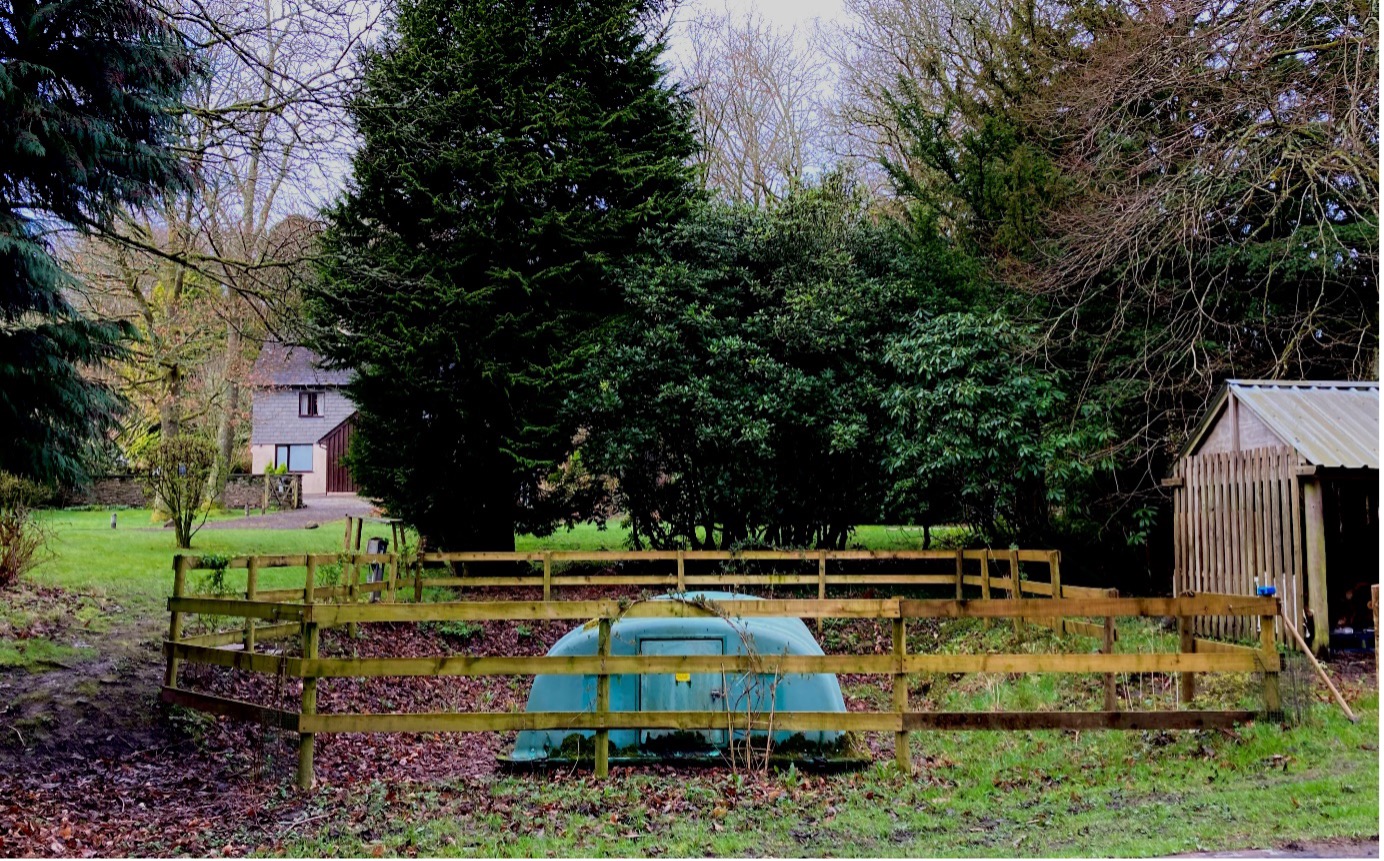
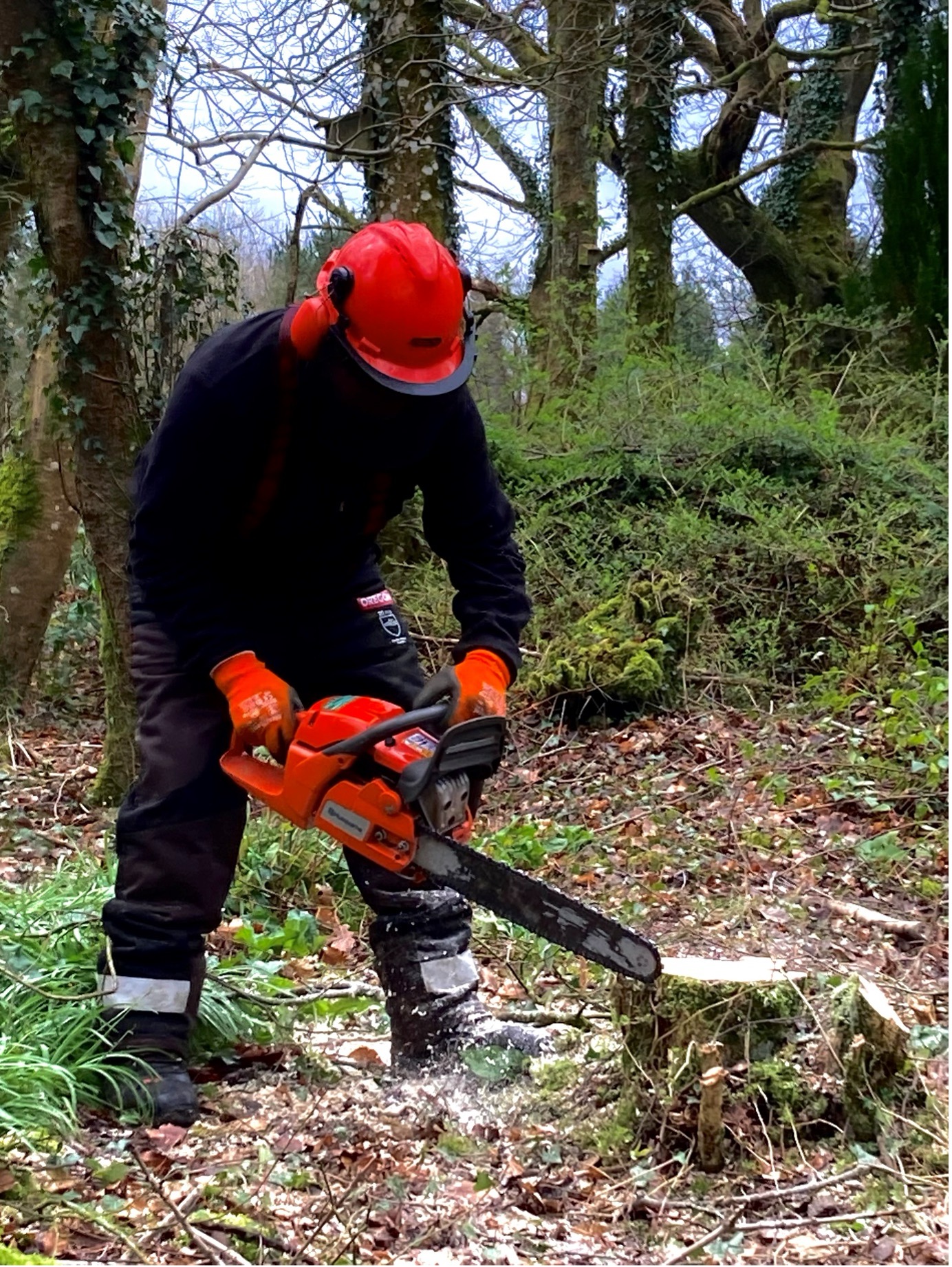
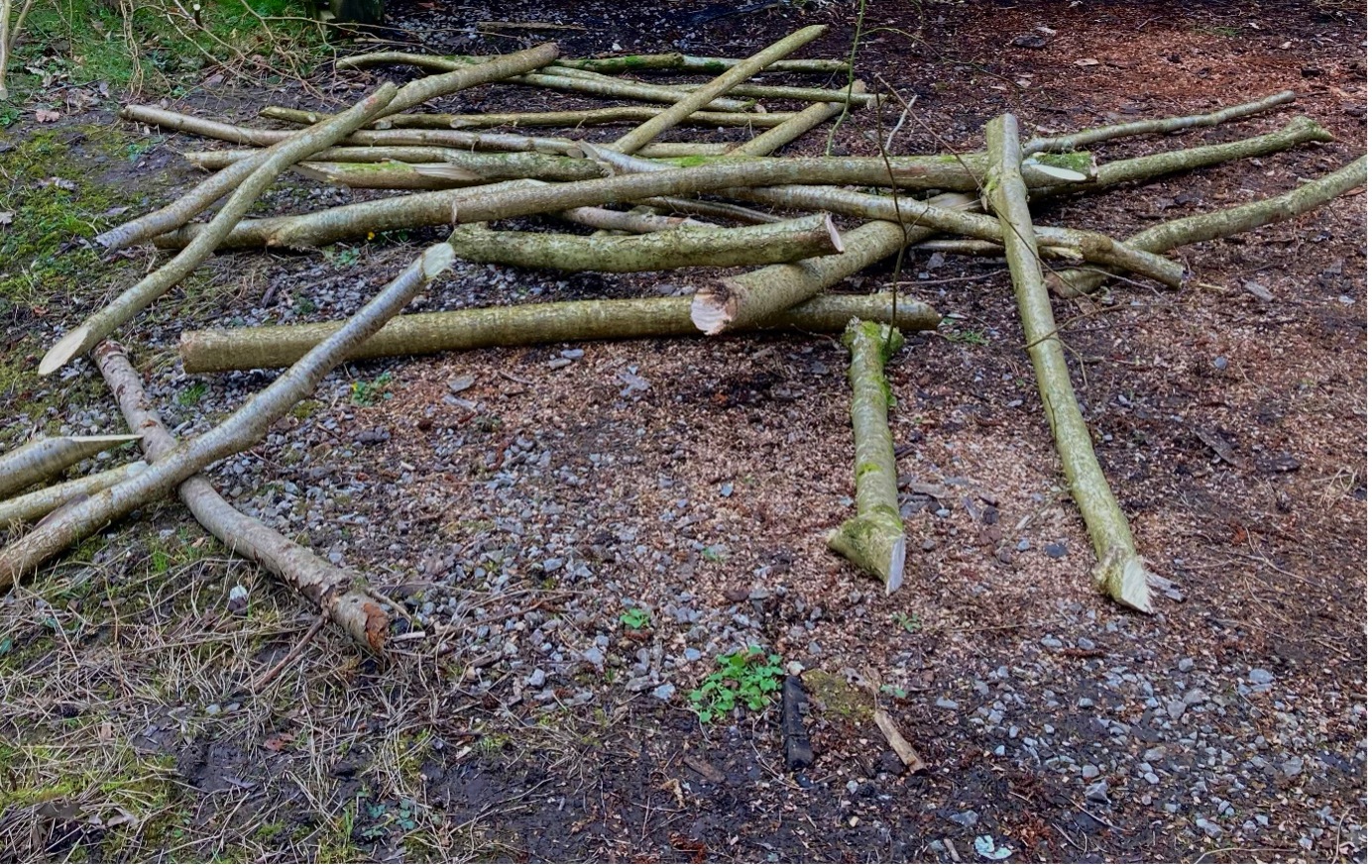
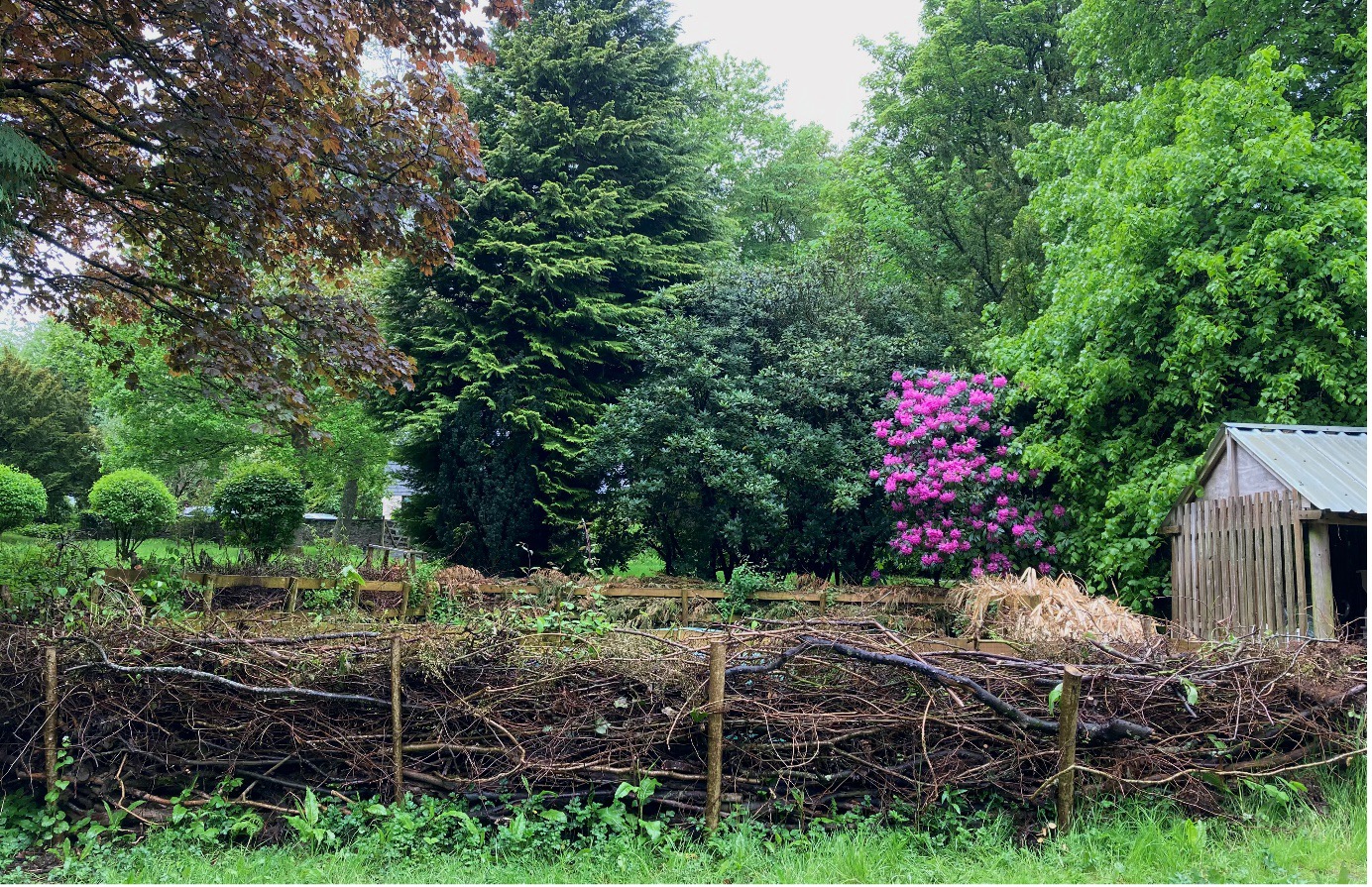
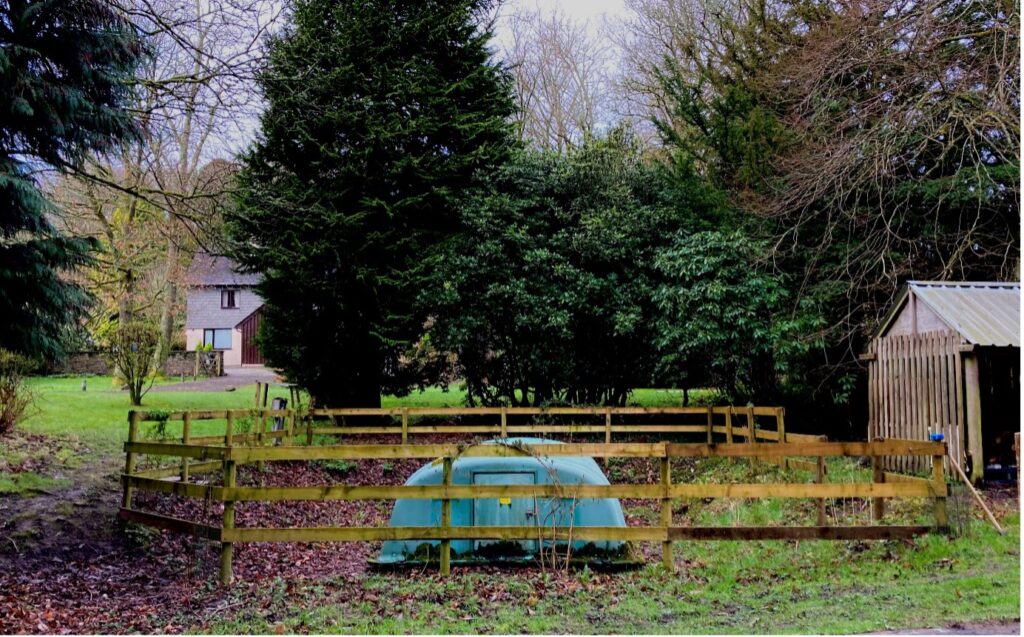
We decided that a dead hedge would provide the perfect screen for our septic tank. First, rods were harvested by coppicing two hazel trees from our woodland; this ancient management technique provides a sustainable source of wood and increases the amount of light that reaches the woodland floor. These rods were sharpened to form stakes and driven into the ground around the existing fence to provide the framework for the dead hedge. We first stacked large branches and logs to form a stable base, and then wove together smaller branches and twigs to create an intricate maze of dead wood. We’ll be continually adding to this over time, providing fresh material for our incredible decomposer species to work their magic on.