
Have you, on an autumnal visit to Higham, noticed brightly coloured fungi growing in the grass?
Waxcaps (and other grassland fungi) tend to be found in graveyards, National Trust sites and places like Higham, where you will find what is known as ‘unimproved’ grassland.
Unimproved grassland is a species-rich but nutrient-poor semi-natural habitat that has not been artificially fertilized, reseeded, or ploughed for a long time.
Grasslands that have not been ‘improved’ in this way are now scarce in the UK, requiring conservation efforts to safeguard these rare habitats for the future.
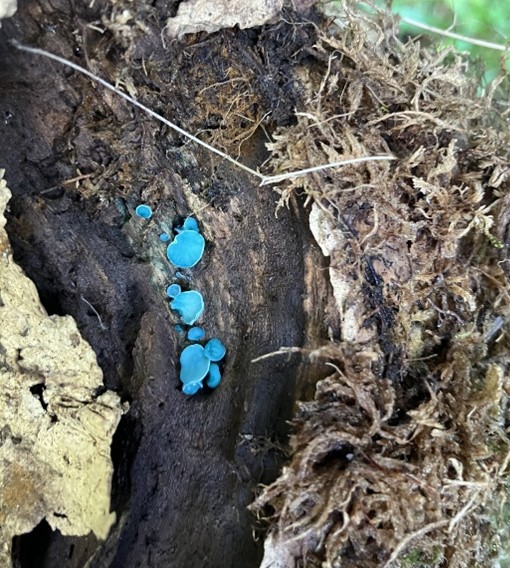
The grassland areas at Higham are being managed to both encourage greater diversity of plant species and preserve the waxcaps and other fungi already present, while in the woodland areas, dead and dying wood is left standing or lying to provide habitat for other fungi.
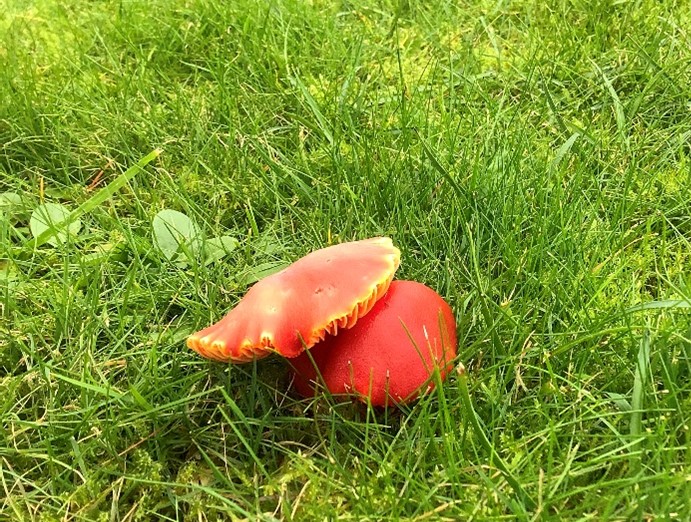
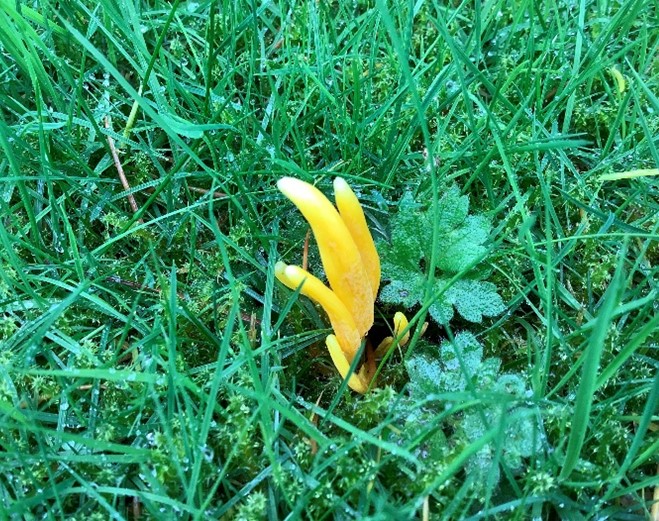
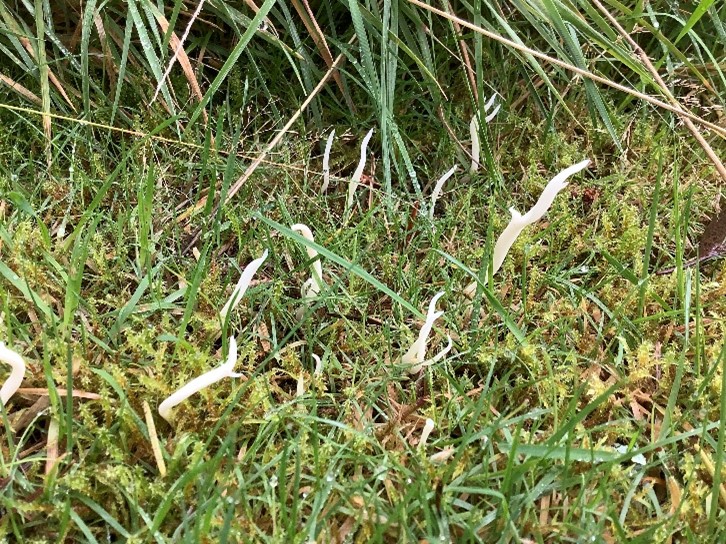
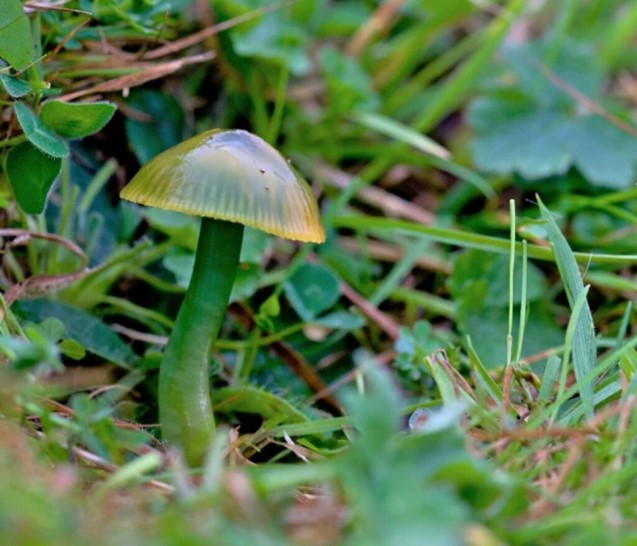
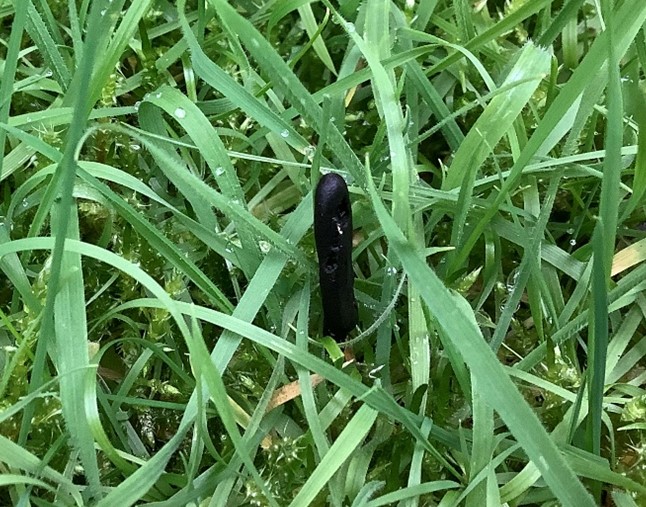
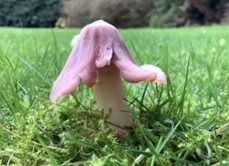
A CHEGD grassland indicates the range of key fungi groups found in the grass: Clavaroids (spindles, clubs and coral fungi), Hygrocybe (waxcaps), Entolomams (pinkgills), Geoglossum (earthtongues) and Dermolomas (crazed caps). All these can be found at Higham, and their sheer numbers here make Higham a regionally important site. On the basis of previous surveys, Higham is only three species below the classification benchmark for a nationally importance site – perhaps the remaining species are lurking quietly somewhere waiting to be found. But if you’re here teaching or attending a course you will know there is limited time to ‘fungi hunt’.
The fungi season lasts from August well into November. One or two special fungi to look out for include the earthtongues – weird and wonderful little black fingers poking up through the grass, very apt at Halloween! Another is Porpolompsis calyptriformis – the Ballerina Waxcap – a dusky pink colour with a cap that curls up like a ballerina’s skirt.
So if you take a walk around the grounds in Autumn, keep your eyes down – and if you see anything unusual emerging from the grass, please take a photo and send it to admin@highamhall.com! You never know, you might have found one of the missing species that could bring Higham national recognition.
ANDREW THURM
Mycology enthusiast & tutor, nature journalling