Our vision for the garden at Higham is a space in which both people and wildlife thrive. Our plan is to create more opportunities for learning, inspiration and connection with nature while demonstrating responsible, sustainable environmental stewardship. We are working to create a range of interlinking habitats, restoring historic and environmental features including native woodland, semi-natural hay meadow, wetland, ornamental and productive gardens. We are developing planting schemes to maximise aesthetic and ecological impact and extend the season of interest while improving paths to make access to the garden easier for everyone.
Before we can make real headway with our ambitions, we need to tackle the various invasive, non-native species that have encroached on the garden, including Rhododendron ponticum. We also need to thin woodland areas to allow light in and reduce competition that would negatively impact the longevity and nature value of Higham’s veteran trees. This will allow a more resilient, biodiverse and interesting woodland understory to develop whilst safeguarding the landscape for future generations.
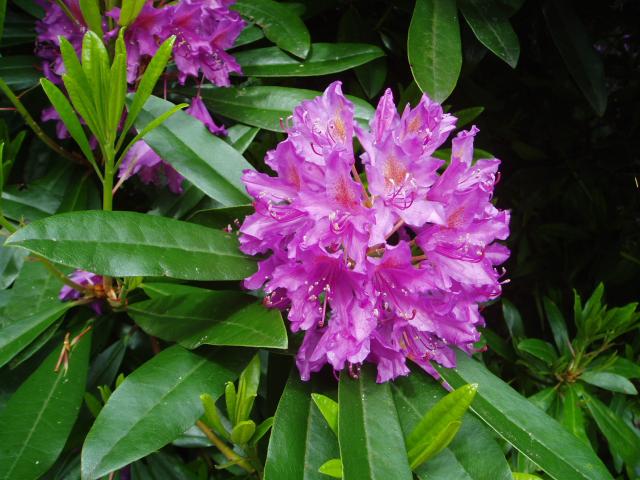
Rhododendron ponticum is one of several rhododendron (and azalea) varieties in the garden at Higham, introduced to the UK during the Victorian era. It hybridised with other species from North America resulting in a highly vigorous strain that causes significant problems for UK woodlands. It is now listed on Schedule 9 of the UK Wildlife and Countryside Act (1981), making it illegal to plant or cause it to grow in the wild. R. ponticum dominates woodlands through prolific seeding and layering that creates a dense canopy, blocks out light and suppresses surrounding vegetation. The leaf litter alters the chemical and biological properties of the soil. It is a common host plant for the fungal pathogen Phytophthora ramorum, a notifiable plant pathogen, which poses a serious threat to trees in the United Kingdom. In areas like the Lake District, where we still have pockets of temperate rainforest, R. ponticum poses a serious threat to the future of this near-unique ecosystem.
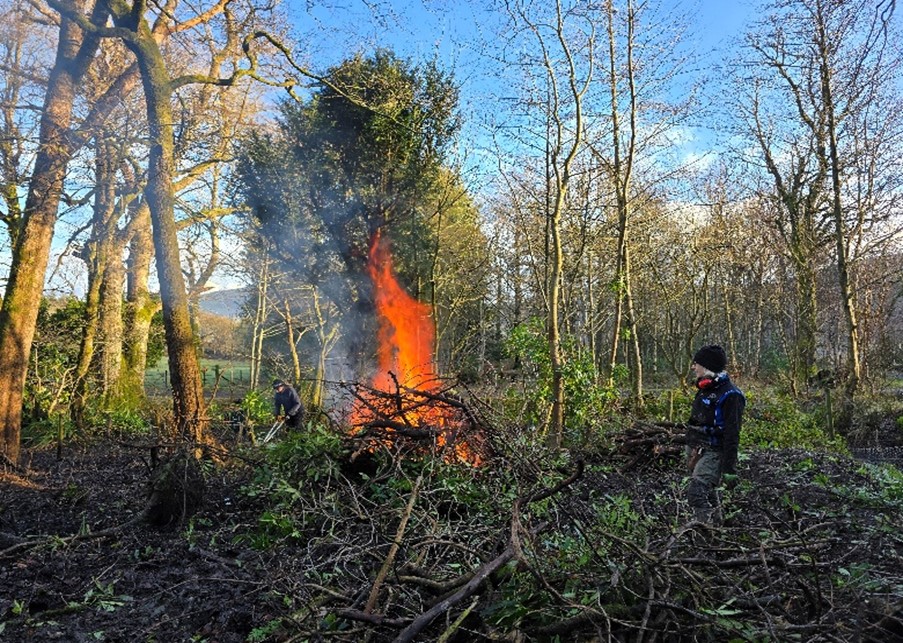
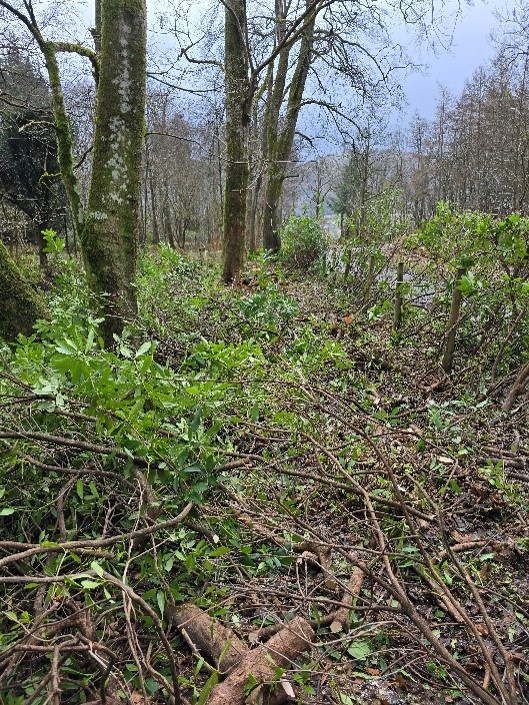
As part of the garden management plan, our garden team have been busy with the arduous task of removing Rhododendron ponticum from the site over winter. This is a multi-phase process that requires cutting the whole shrub to ground level. The brash is burned as a precaution to guard against the risk of spreading Phytophthora ramorum. Seedlings and recently layered plants will be grubbed from the ground, but mature thickets will require stem treatments to prevent future regrowth.
Process of cutting and burning Rhododendron ponticum as part of the garden management plan. Garden volunteers are playing a key role in this work.
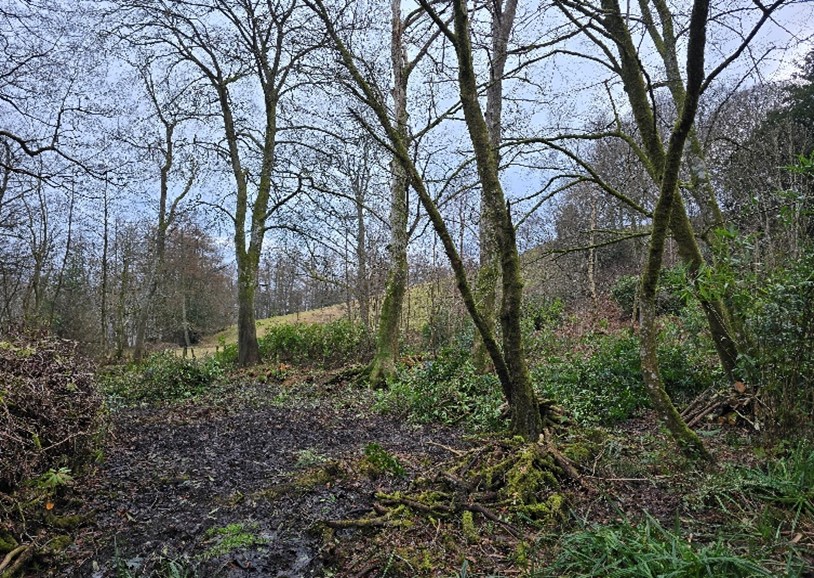
Initially, this process can appear drastic as the woodland quickly opens up. The early benefit is that more sunlight can penetrate through the canopy, reawakening dormant plants and stimulating regeneration of the woodland floor. This will provide food sources and habitat for wildlife to prosper.
After complete eradication of Rhododendron ponticum it will be possible to establish more long-lived trees, a range of interesting shrubs and a complimentary herbaceous layer. This work will allow us to build back a thriving woodland ecosystem and maximise the wide-ranging educational, health and wellbeing benefits of these spaces for current and future generations.
Further Information:
https://www.nts.org.uk/stories/problem-rhododendron-ponticum-garden-guide